Expertise & precise pruning technique
Not simply cutting. Understanding how a tree grows.
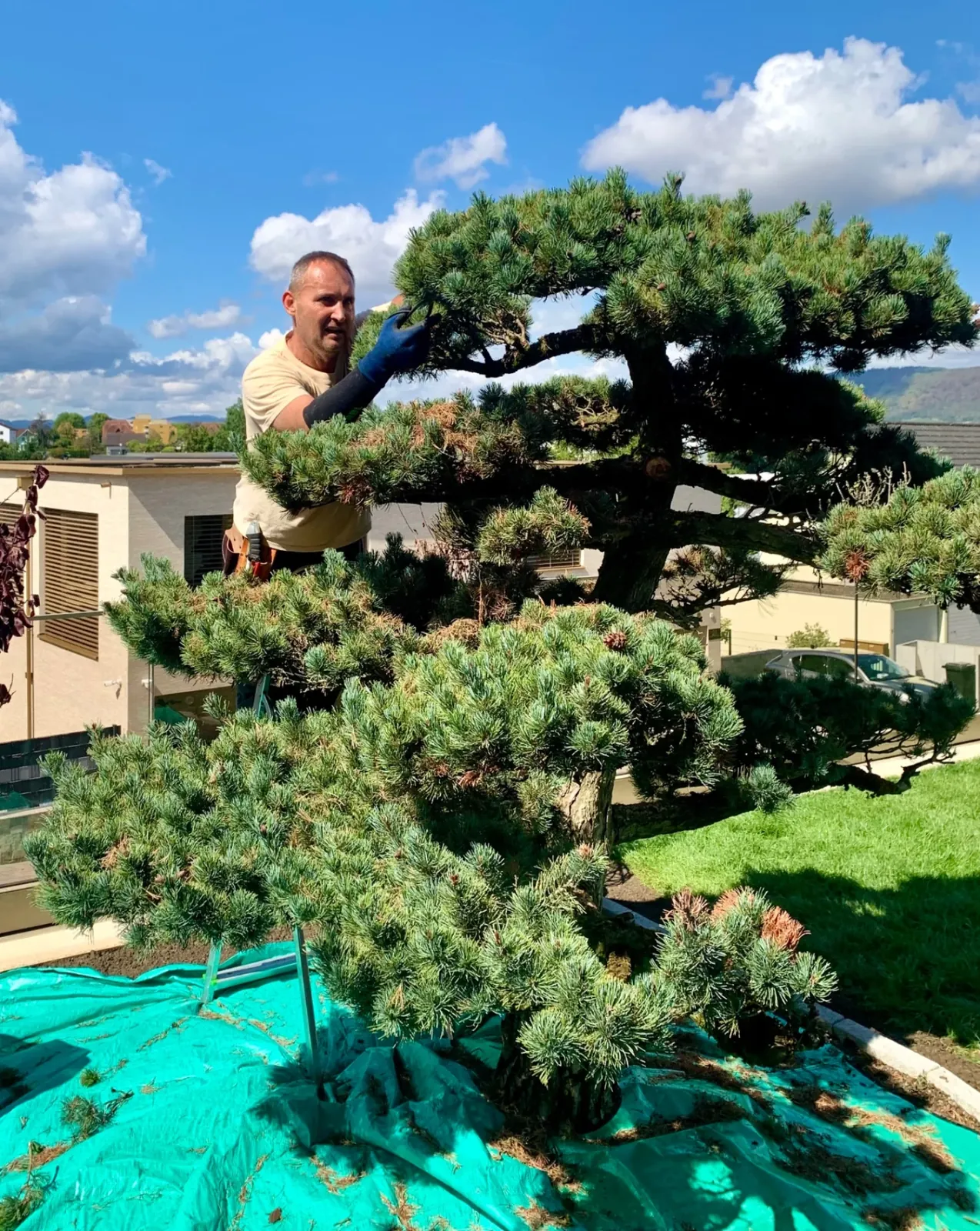
For me, professional woody plant care means more than just cutting and shaping.
What matters is understanding how a tree grows, where its vigour is concentrated and how every intervention affects its further development.
My goal is therefore not only a beautiful shape right after pruning, but a healthy, balanced and characterful development of the plant over many years.
Only a healthy tree can look beautiful, delight its owner, and have prospects for long-term growth and development. A sick tree is unlikely to bring positive emotions to its owner.
Precise pruning
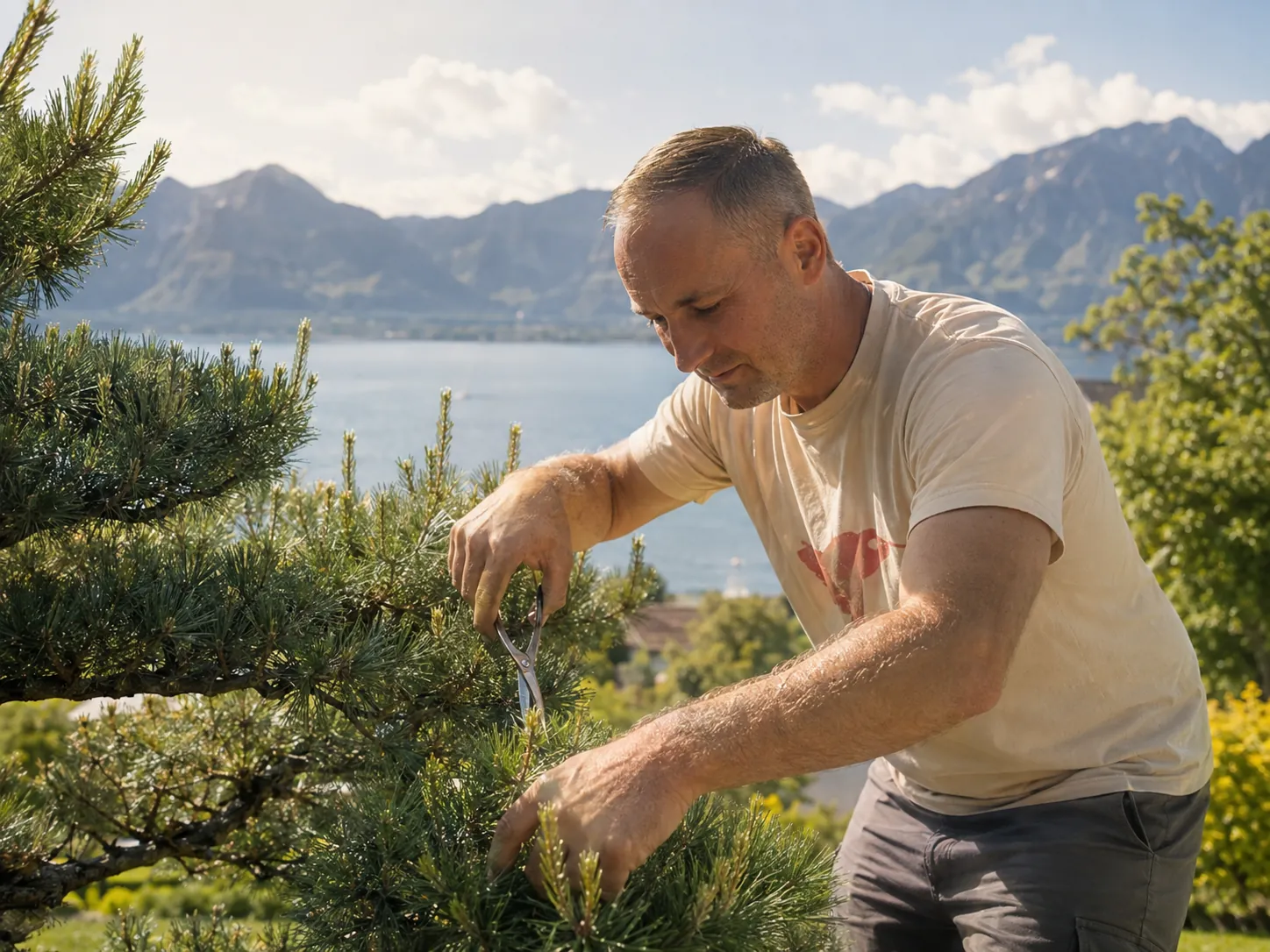
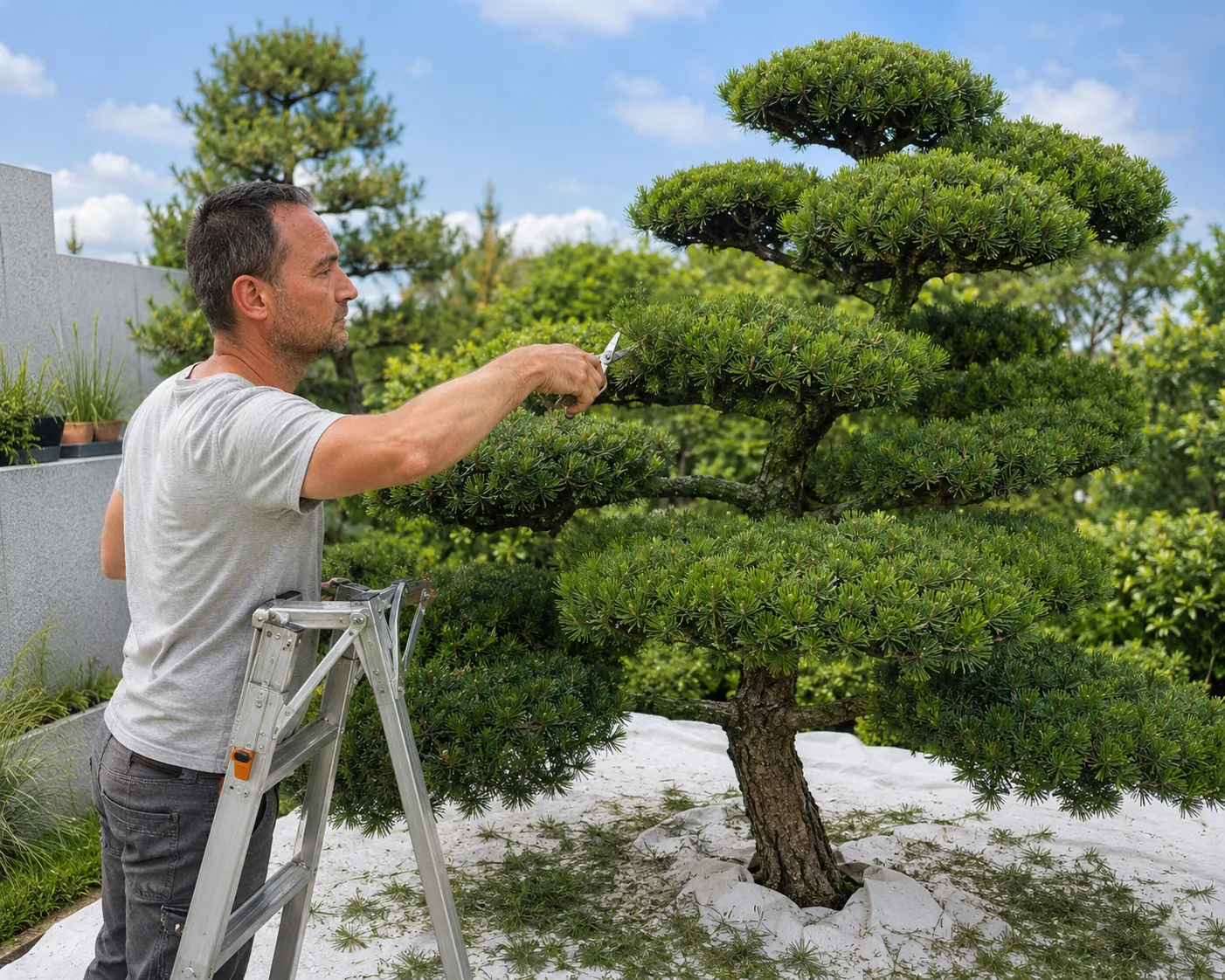
For garden bonsai, topiary and selected woody plants I work with high-quality, very sharp topiary and hand shears.
A clean, precise cut reduces unnecessary damage to leaves, needles and young shoots and allows controlled, harmonious shaping.
With valuable topiary and garden bonsai, however, it is not only about how you cut, but above all about what you cut.
With young shoots and candles – especially on pines – the right selection is decisive: which shoots stay? which are reduced? which should be removed completely?
Crown structure & growth balance
An essential part of my work is preventing excessive densification of the crown – especially of the individual tiers and characteristic "clouds" of a garden bonsai.
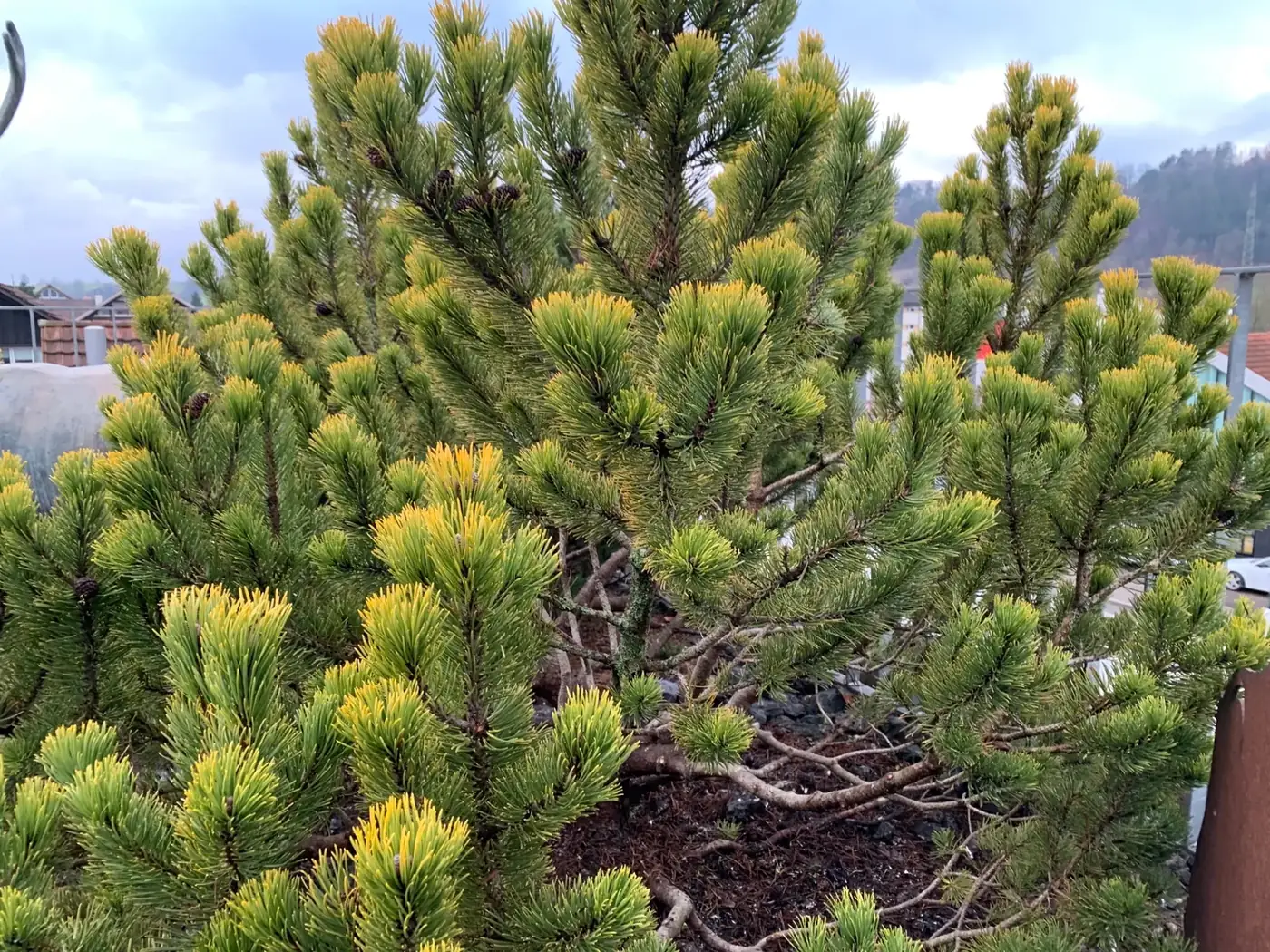
On pines in particular, numerous new shoots can emerge from one small point. If they are not regulated over the years, the structure becomes ever denser and hard to control.
Light and air reach the interior of the crown less well. At the same time, too much vigour can concentrate in certain areas while others become progressively weaker.
That is why shoots are not simply cut back evenly, but deliberately selected, reduced and distributed.
In doing so I take the differing vigour within the tree into account. The upper crown often develops more strongly, while middle and especially lower areas can grow more weakly.
Treating the crown areas differently helps to balance vigour. This preserves and develops the existing structure, proportions and natural character of the tree in the long term.
Not every shoot has to stay. And not every area of a tree is treated the same.
Plant health & preventive care
Professional care also includes carefully observing the health of a tree.
Dead, damaged or conspicuous branches and shoots can be removed selectively. Overly dense crowns can be thinned professionally so that more light and air reach the interior again.
This improves the structure of the tree and can reduce conditions that favour certain fungal diseases.
If there are visible abnormalities, possible fungal issues or signs of pests, I assess the plant's condition and recommend suitable further care measures.
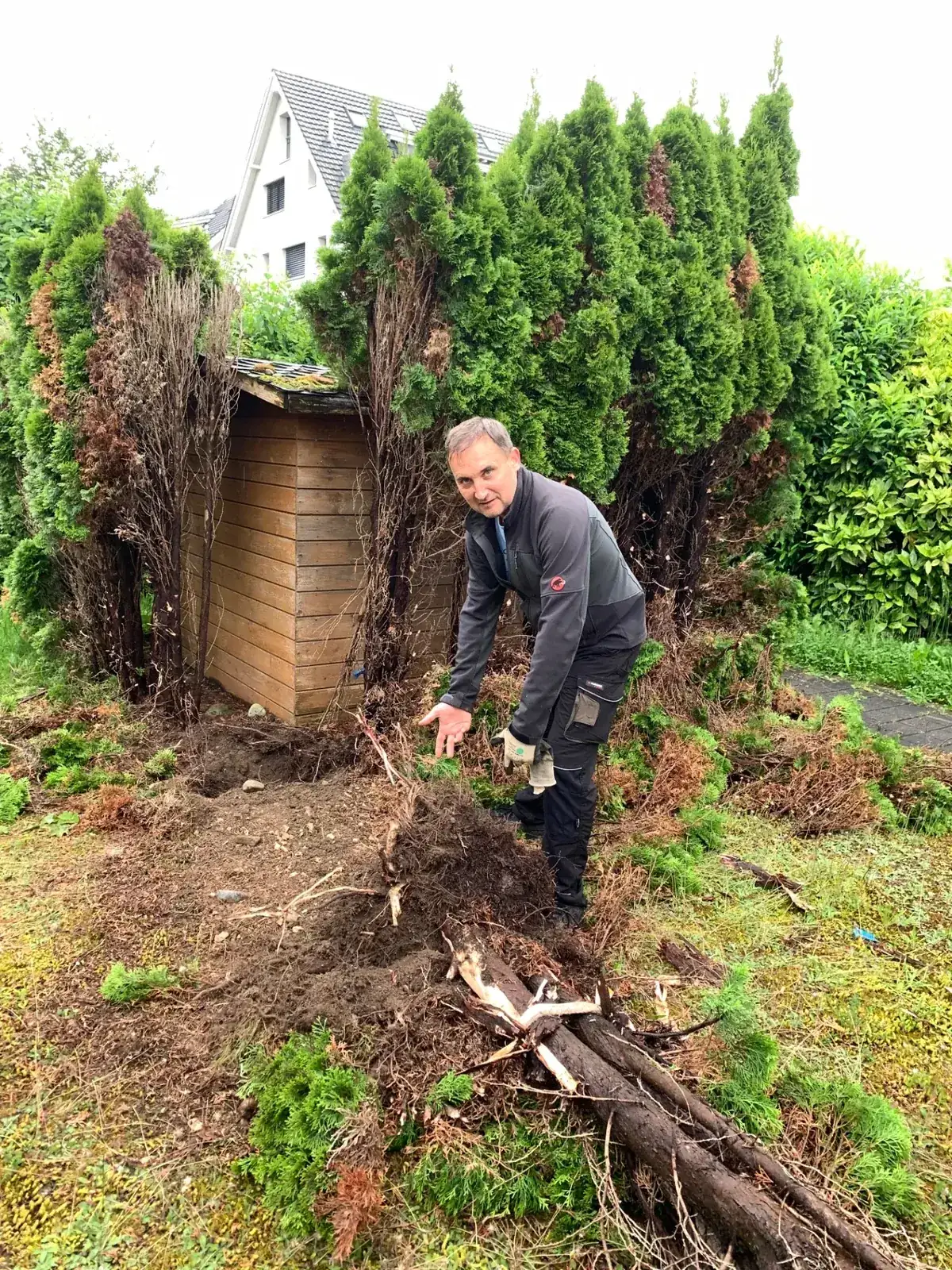
A problematic tree does not automatically have to be removed
A weakened, neglected or partly damaged tree is not automatically a tree that must be felled or fully replaced.
Sometimes targeted thinning, removing damaged areas, correcting the crown and subsequent professional care can be an alternative.
Before deciding to remove a valuable tree, topiary or garden bonsai, a second assessment is worthwhile.
Perhaps there is another way.
If the tree's condition allows it, my goal is to preserve as much existing substance as possible, develop the tree further and keep its natural character.
Practical examples from my work
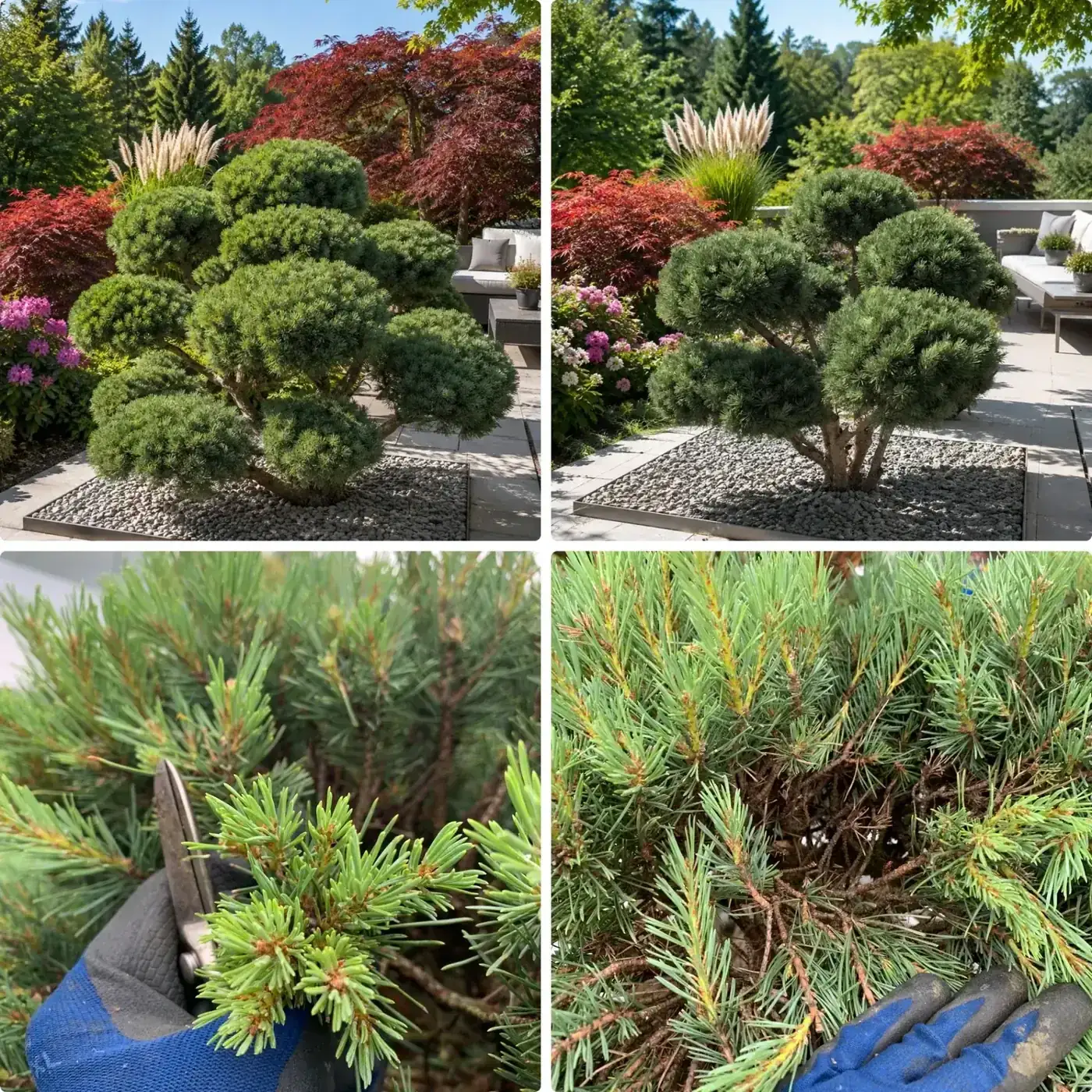
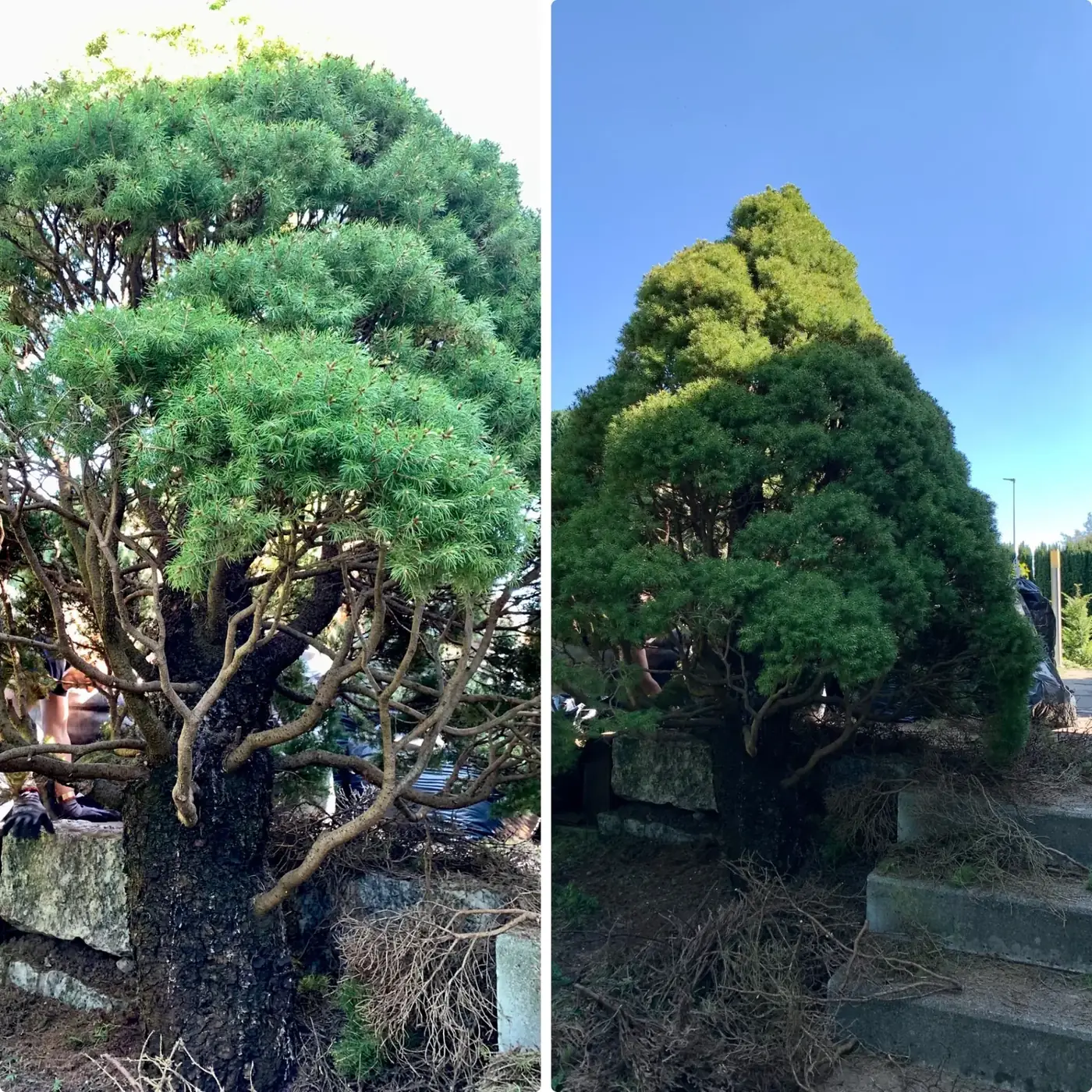
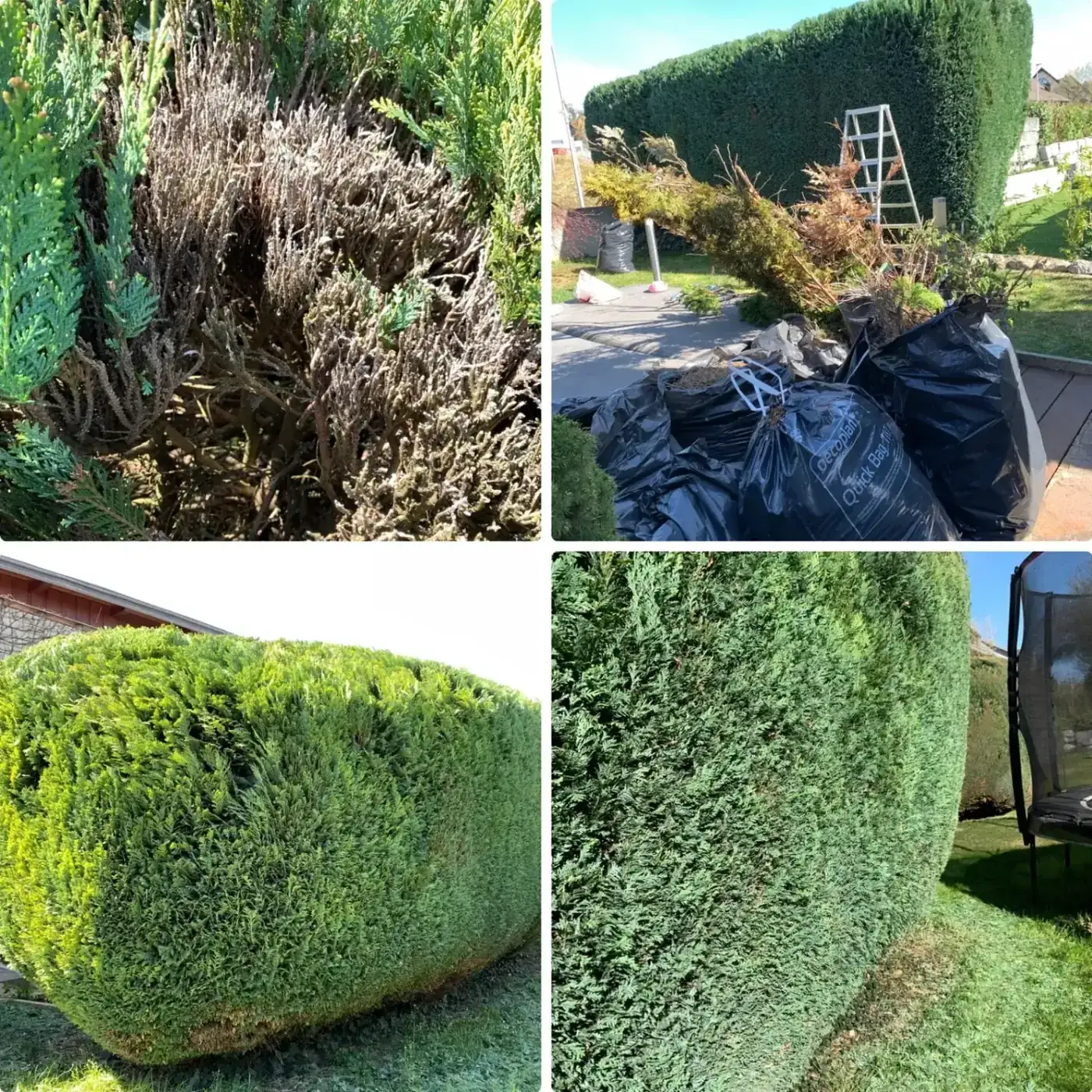
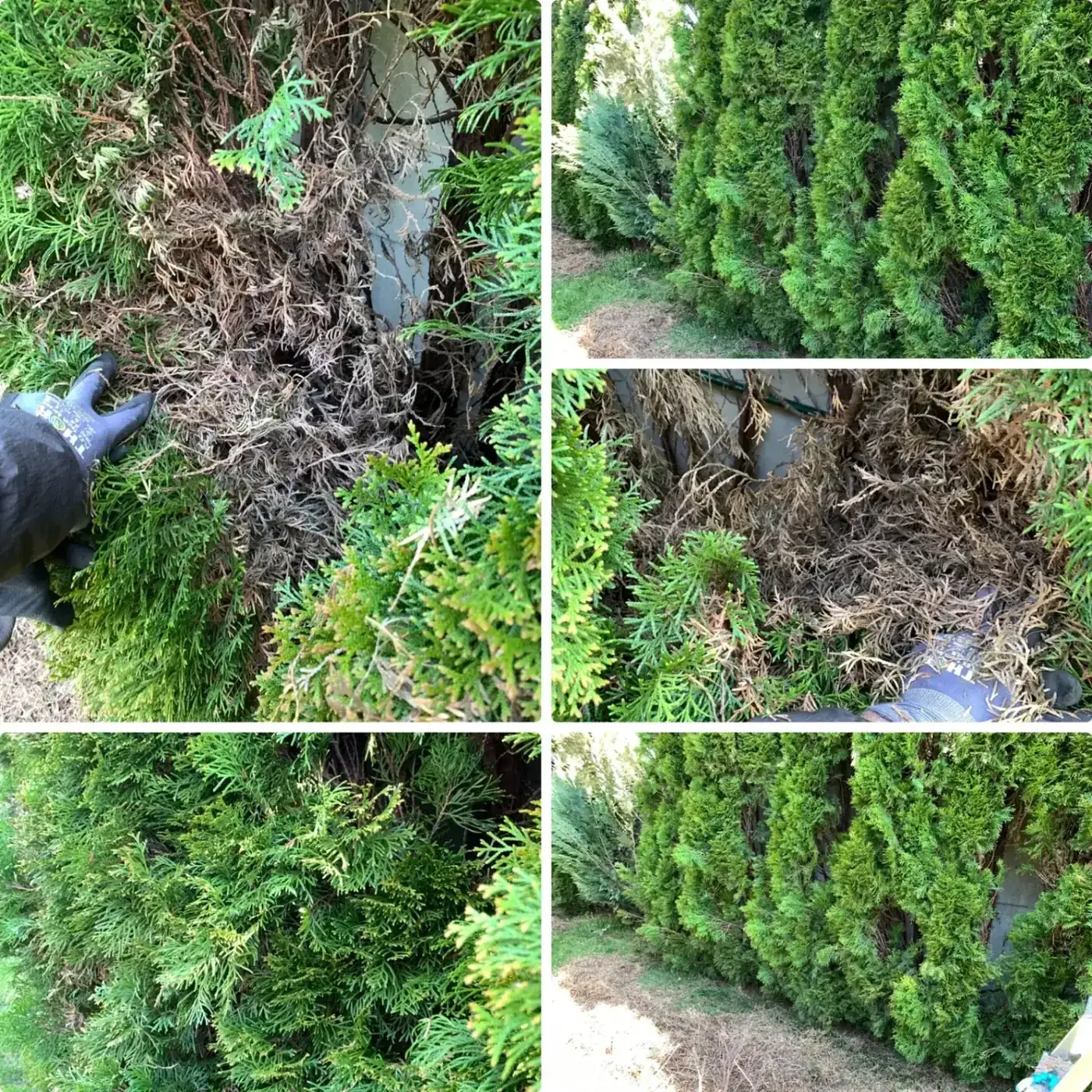
Documented work on pines, yews and hedge-forming woody plants: thinning the tiers, correcting crowns, removing dead inner wood and clean removal of the cuttings.
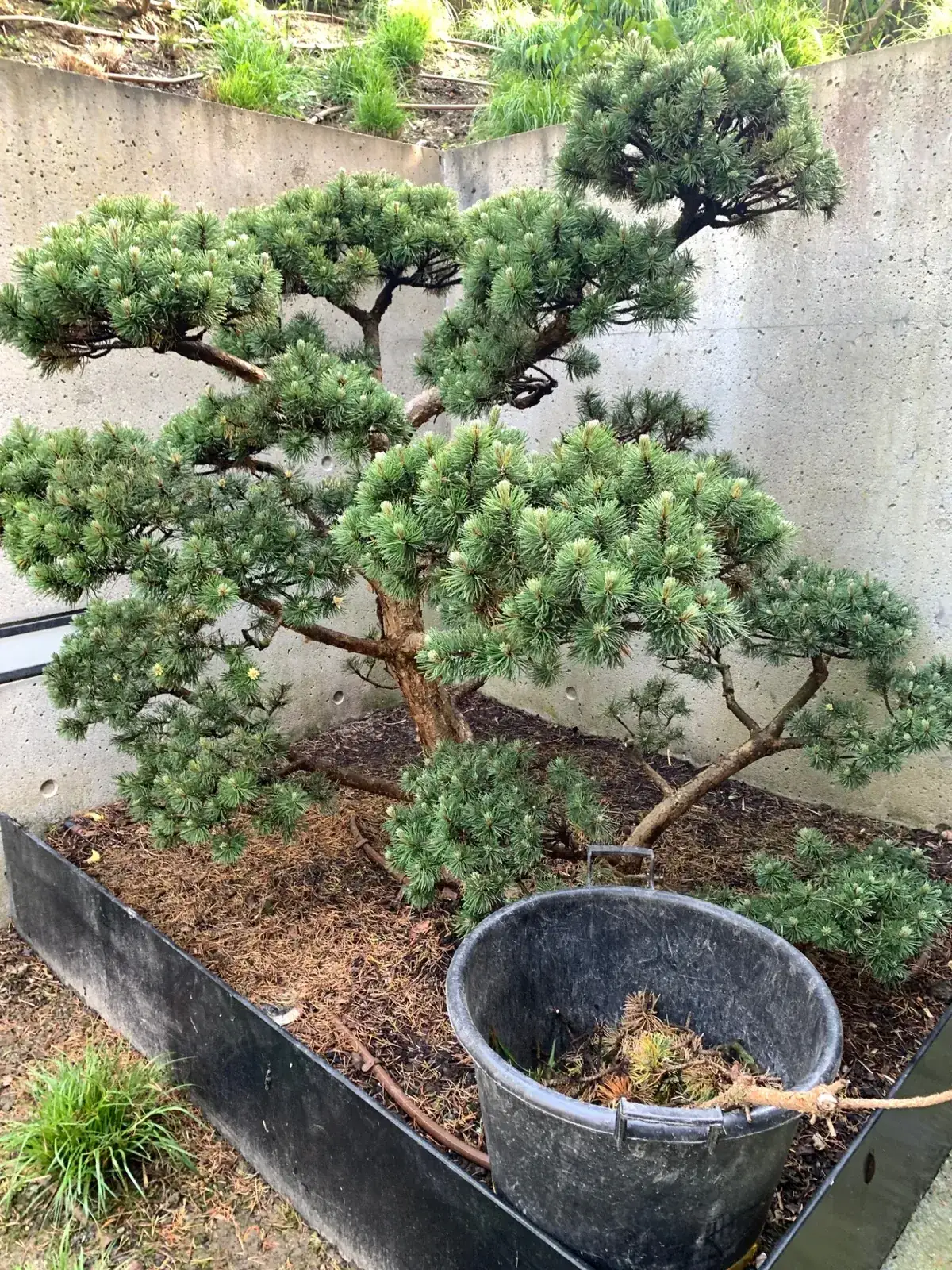
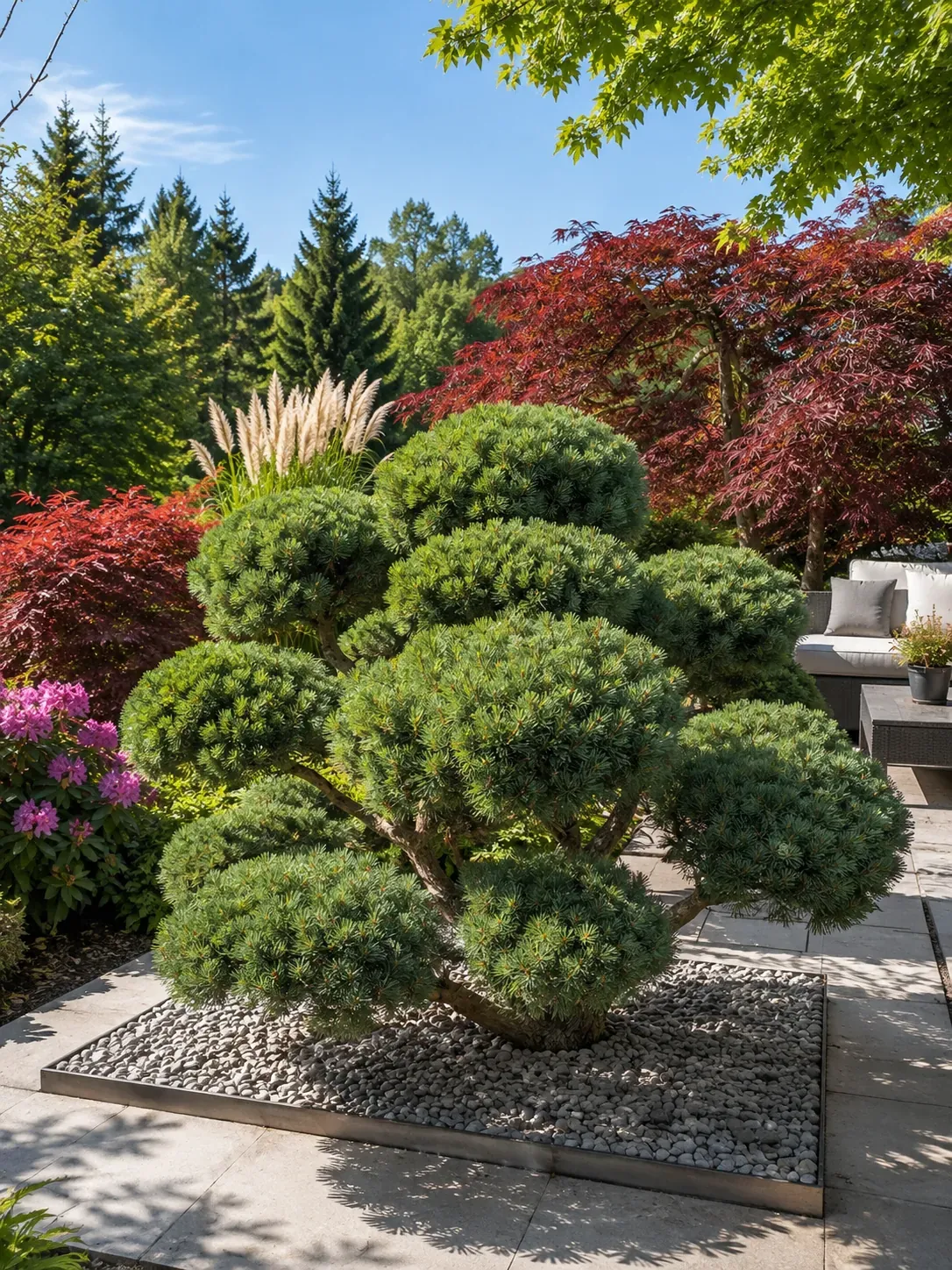
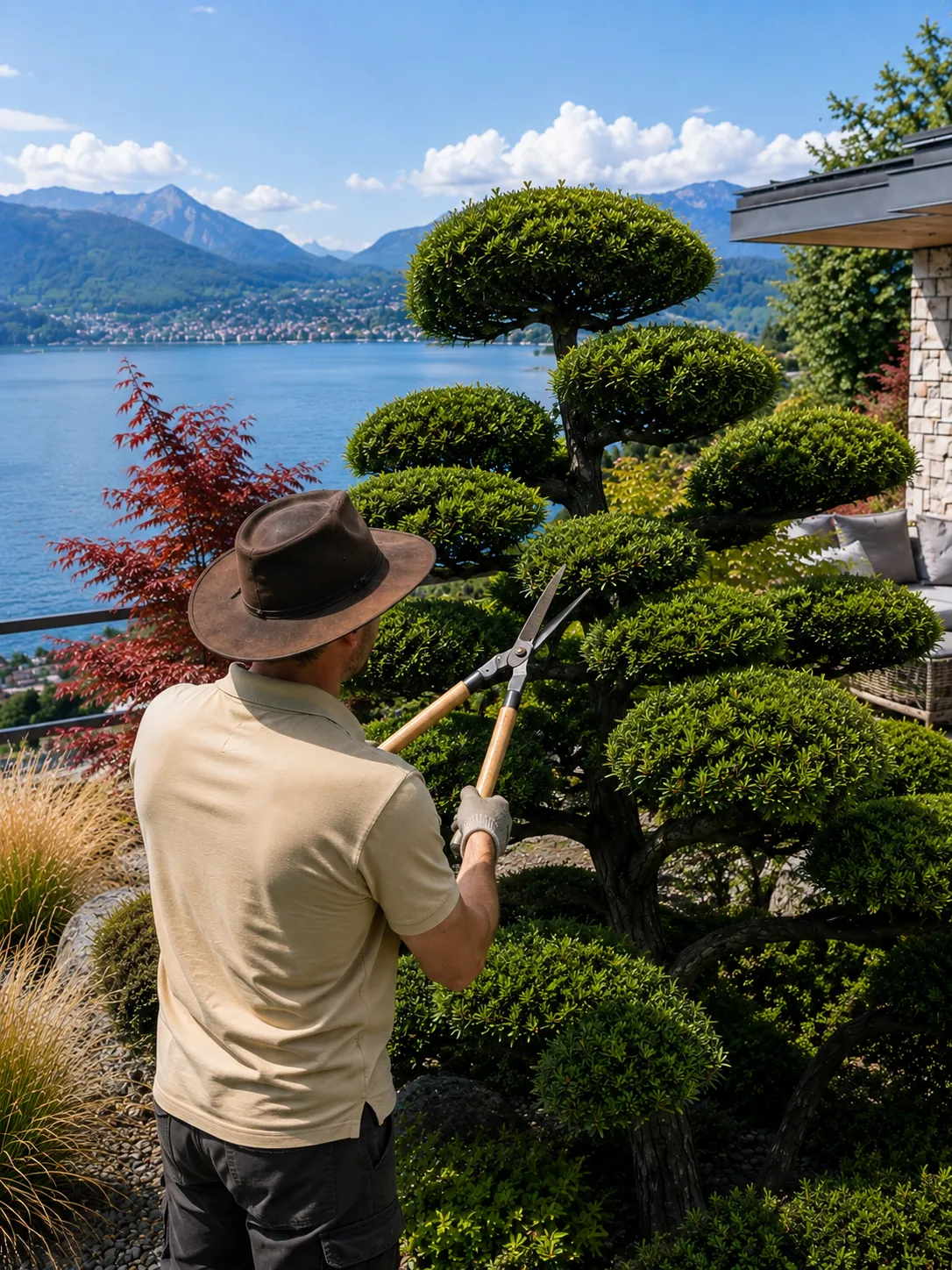
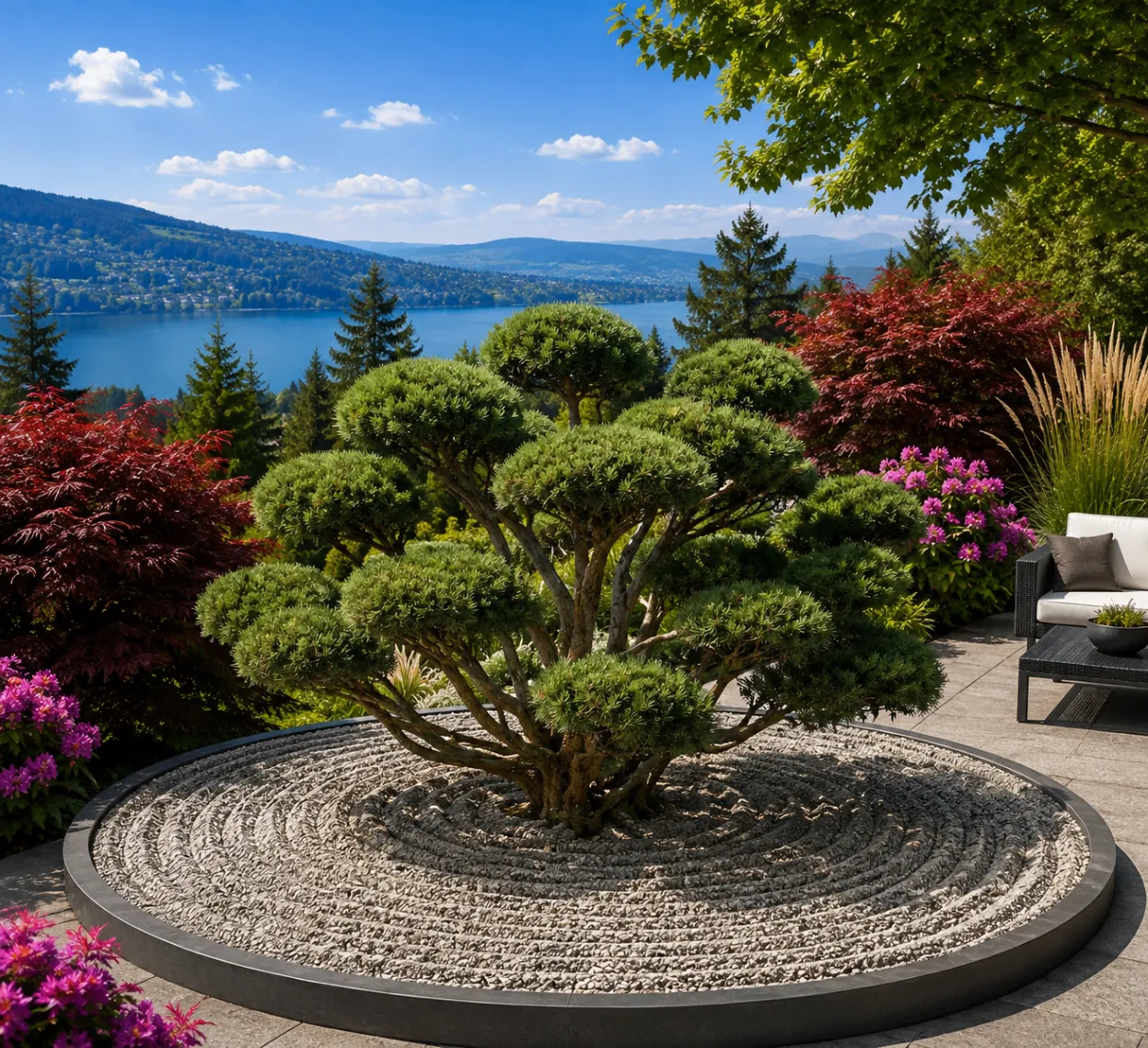
A tree in a pot – nature in an artificially created habitat
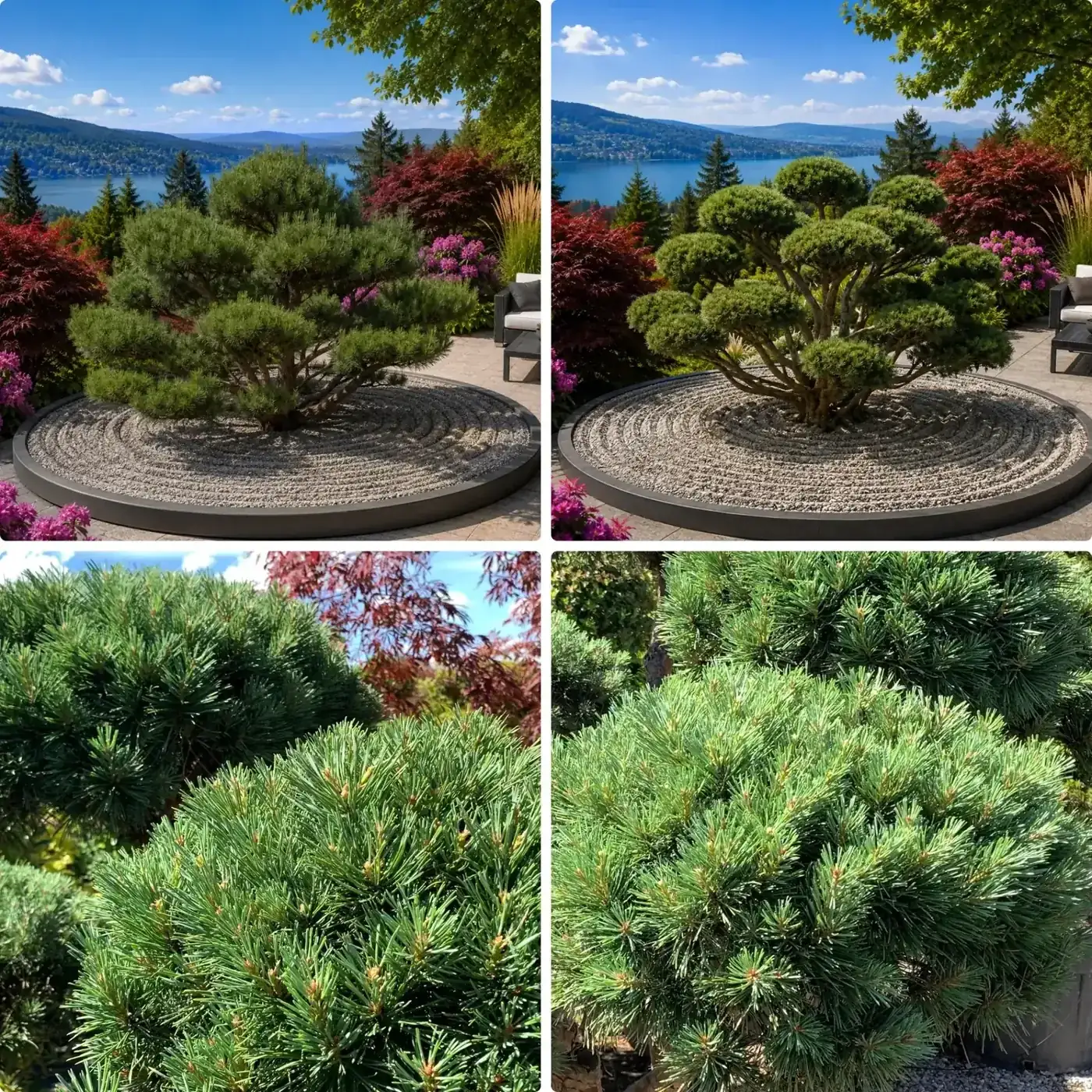
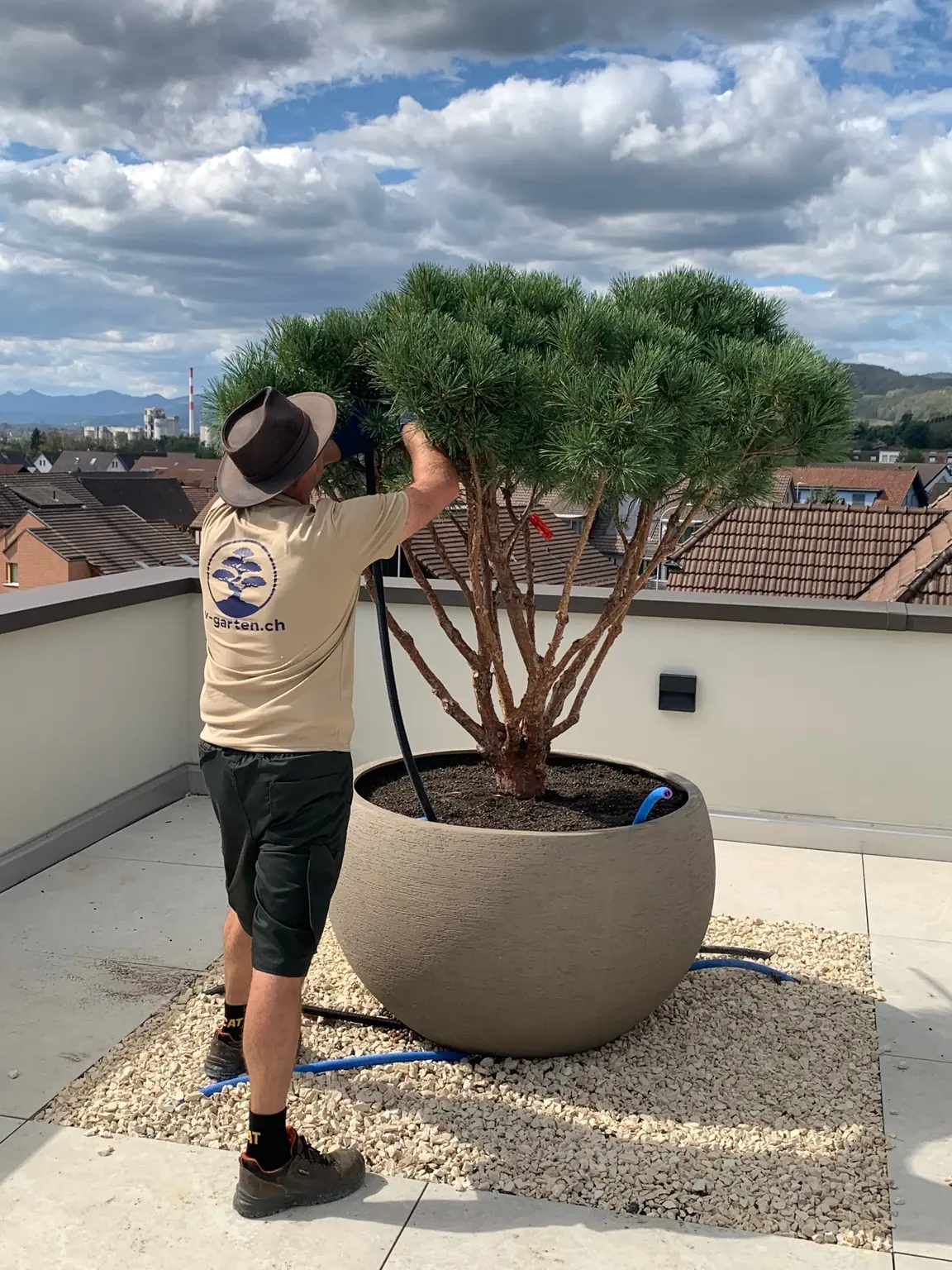
Many people wish for a beautiful, fully grown tree in an elegant planter on their terrace – be it a garden bonsai, a Japanese maple or, as in this example, a Pinus sylvestris 'Watereri' that has received its characteristic umbrella or mushroom shape through targeted pruning.
What is often underestimated: a tree that grows permanently in a pot on a terrace does not live under the conditions that free nature offers it. Its habitat is artificially created and limited. That is why it needs especially careful and well-thought-out care.
Many factors should already be considered when planting. One example is the previous orientation of the tree. Wherever possible, the position of the trunk and the so-called front of the tree should, even after repotting, again face the same direction in which the tree previously grew. This allows it to settle into its new location without unnecessary change.
A balanced supply of nutrients is equally important. Both a deficiency and excessive fertilising can harm the tree. The amount of fertiliser should therefore always be calculated taking into account the substrate volume actually available. For trees in pots, a long-term fertiliser is often recommended: it supplies the plant evenly over a longer period and contributes to a vital and lasting beautiful appearance.
The position of the trunk in the planter should also be carefully planned at planting time. Ideally, the trunk sits as centrally as possible in relation to the pot's diameter. The crown can be changed and adapted over the years through pruning and shaping – the trunk, once set, remains in its place. A well-thought-out starting position is therefore decisive for the later shaping of the whole tree.
Last but not least, the later watering must be taken into account already when choosing the location and the planter. A tree standing on a sunny terrace in a pot needs considerably more attention when watering than a comparable tree growing in open ground. The limited substrate volume heats up faster and, especially in intense sunshine, dries out much faster.
A beautiful tree in a pot is therefore far more than just a decorative element. It is a living piece of nature in a habitat created by humans. Only when location, orientation, planting, substrate, fertilising, watering and later care are considered as one connected system from the very beginning can the conditions for long-term healthy and beautiful growth be created.
And precisely then, a tree on the terrace can bring joy for many years, develop its character and enrich its owner every day with its beauty and natural presence.
A problem with a tree? Send me photos via WhatsApp.
It does not matter whether the tree stands in a garden or on a terrace.
If you notice changes, damaged areas, unusual growth, an overly dense crown or other problems on your tree, garden bonsai or topiary, send me a few meaningful photos directly via WhatsApp.
Please send if possible:
- one photo of the whole tree
- photos from different angles
- clear close-ups of the problem areas
- a short description of what you noticed
- if known: tree or plant species
- your location or postcode
Based on the photos you receive a free first assessment and a recommendation on which next steps could make sense.
Not every problem means a tree has to be removed.
Sometimes targeted professional measures help to preserve a valuable tree and develop its natural form and character.
Free first assessment based on the photos submitted. An assessment by photo does not replace an on-site inspection. In case of complex damage, disease or unclear causes, a personal inspection or further professional examination may be necessary.
Precise pruning. Balanced growth. Healthy plants. Characterful forms.